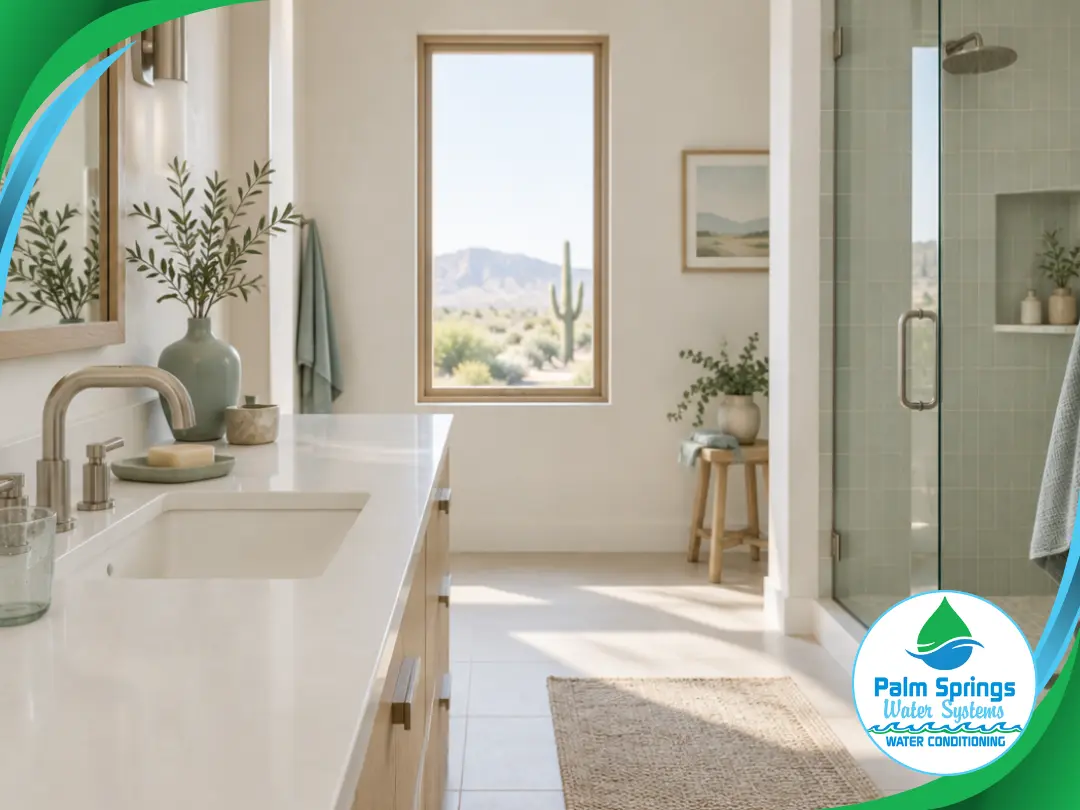
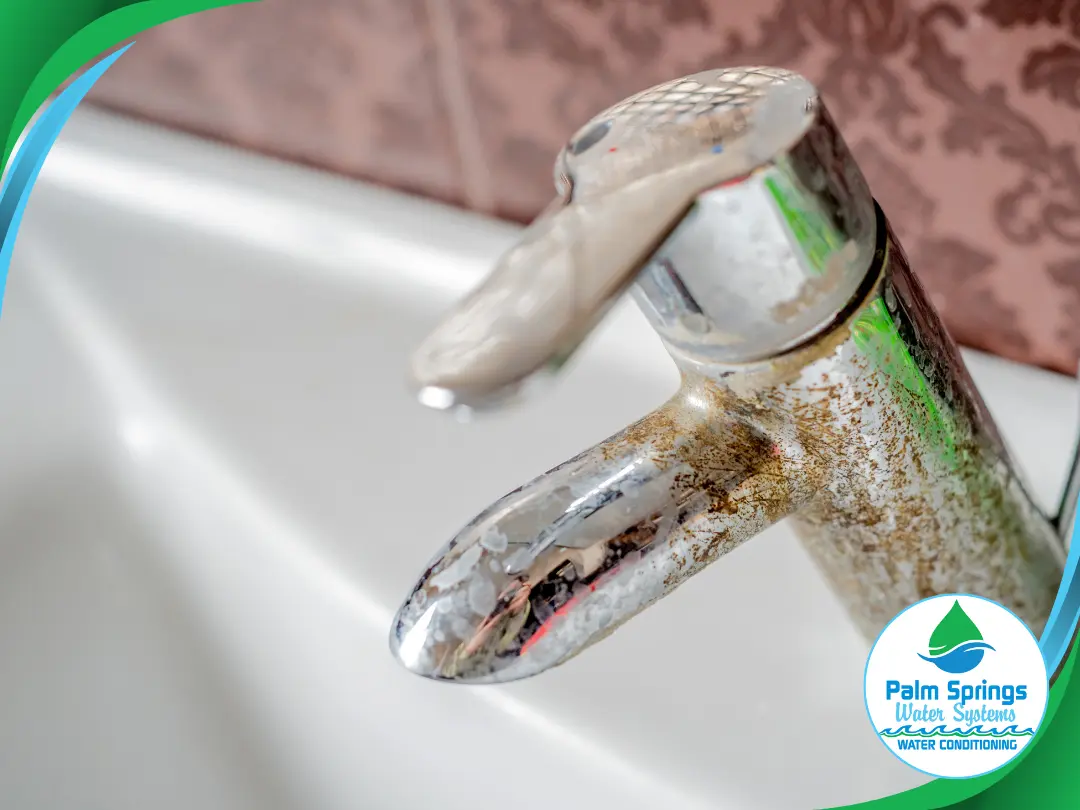
If you live in Palm Springs or elsewhere in the Coachella Valley, you may have noticed white spots on your faucets, mineral buildup around showerheads, cloudy glassware or stubborn scale on shower doors. These are all common signs of hard water.
But exactly how hard is the water in Palm Springs? And, more importantly, what does that mean for your home, plumbing and appliances?
Palm Springs and Coachella Valley water can contain significant amounts of naturally occurring hardness minerals, particularly calcium and magnesium. However, water hardness can vary considerably depending on your location and water source. That means the best way to determine how hard your home’s water really is is to have it tested.
Here’s what Palm Springs-area homeowners should know about local hard water, how to recognize it and what you can do about it.
What Is Hard Water?
Hard water is water containing elevated concentrations of dissolved minerals—primarily calcium and magnesium.
These minerals are naturally picked up as water travels through soil, rock and underground geological formations. The minerals themselves aren’t necessarily a drinking water safety problem. Instead, hardness is primarily a water quality and household performance issue.
As water evaporates or is heated, those dissolved minerals can be left behind as deposits commonly called scale.
That scale is responsible for many of the problems homeowners associate with hard water.
How Is Water Hardness Measured?
Water hardness is commonly expressed as either:
- Milligrams per liter (mg/L) or parts per million (ppm) of calcium carbonate
- Grains per gallon (gpg)
A commonly used classification looks like this:
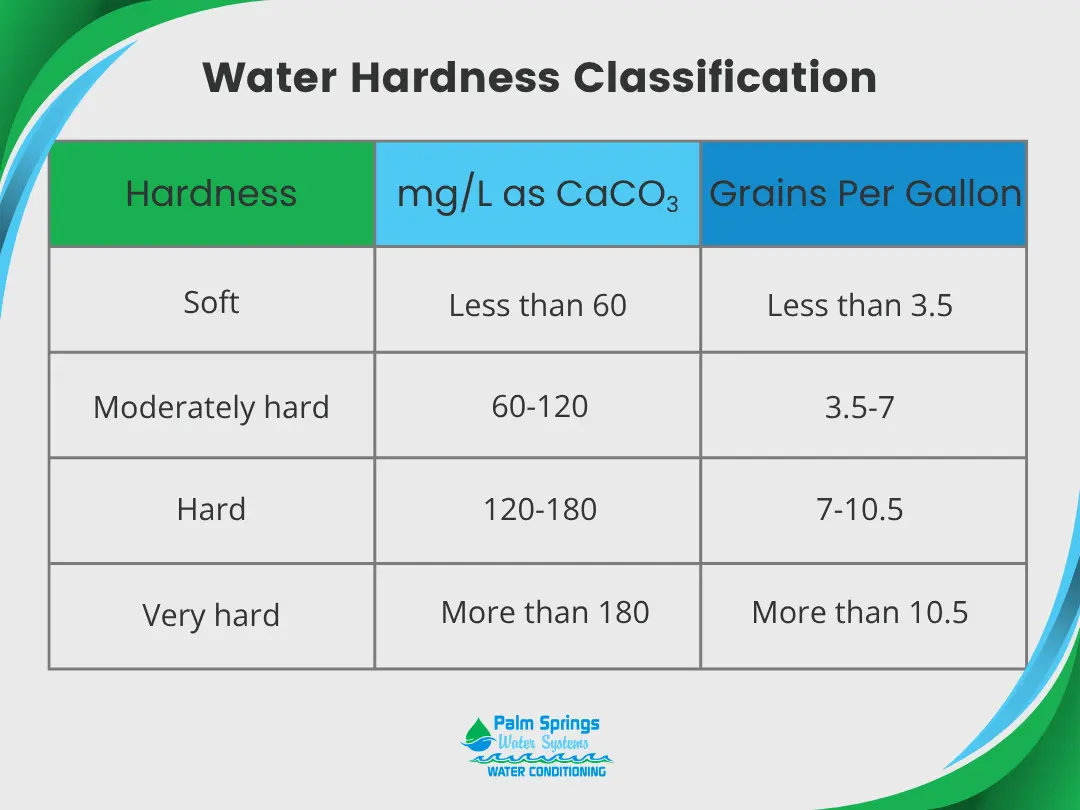
Your home’s actual reading is more useful than a general regional average because water hardness can differ from one water source or service area to another.
So, How Hard Is the Water in Palm Springs?
There isn’t one hardness number that accurately describes every home in Palm Springs or the entire Coachella Valley.
The region relies heavily on groundwater from the Coachella Valley aquifer, and mineral concentrations can vary depending on where the water is drawn and the area being served. Published water quality data for Coachella Valley communities shows considerable variation in hardness levels.
That’s why your neighbor across town—or even a home served by a different water source—may experience hard water differently than you do.
Instead of asking only, “How hard is Palm Springs water?” a better question is: “How hard is the water coming into my home?”
A water test can provide that answer and help determine whether water treatment would be beneficial.
Why Does the Coachella Valley Have Hard Water?
Hardness minerals occur naturally.
As groundwater moves through underground rock and soil, it can dissolve calcium, magnesium and other minerals. Those minerals remain dissolved in the water as it makes its way into the water supply.
This is why hard water is common in many desert and Southwestern communities.
The important distinction is that hardness does not automatically mean your water is unsafe to drink. Water hardness describes mineral content rather than overall drinking water safety.
For homeowners, the biggest concerns are usually what those minerals do inside the home.
7 Common Signs of Hard Water in Your Palm Springs Home
You don’t necessarily need laboratory equipment to suspect you have hard water. Your house may already be giving you clues.
1. White Scale Around Faucets and Fixtures
One of the easiest signs to recognize is a chalky white residue around faucets, showerheads and other places where water frequently evaporates.
You may clean it away only to see it return.
2. Spots on Glassware
Do glasses come out of the dishwasher looking cloudy or covered with spots?
Hard water minerals can remain behind after water droplets evaporate, leaving visible deposits on dishes and glassware.
3. Cloudy Shower Doors
Glass shower enclosures can be especially frustrating in a home with hard water. Repeated exposure can result in stubborn mineral deposits that ordinary cleaning may have difficulty removing.
4. Scale Around Showerheads
Minerals can collect around the small openings in showerheads and faucet aerators. Over time, buildup can interfere with water flow.
5. Soap That Doesn’t Lather Well
Hardness minerals interact with soap, making it more difficult to produce a rich lather.
You may find yourself using more soap, shampoo, detergent and cleaning products than you would with soft water.
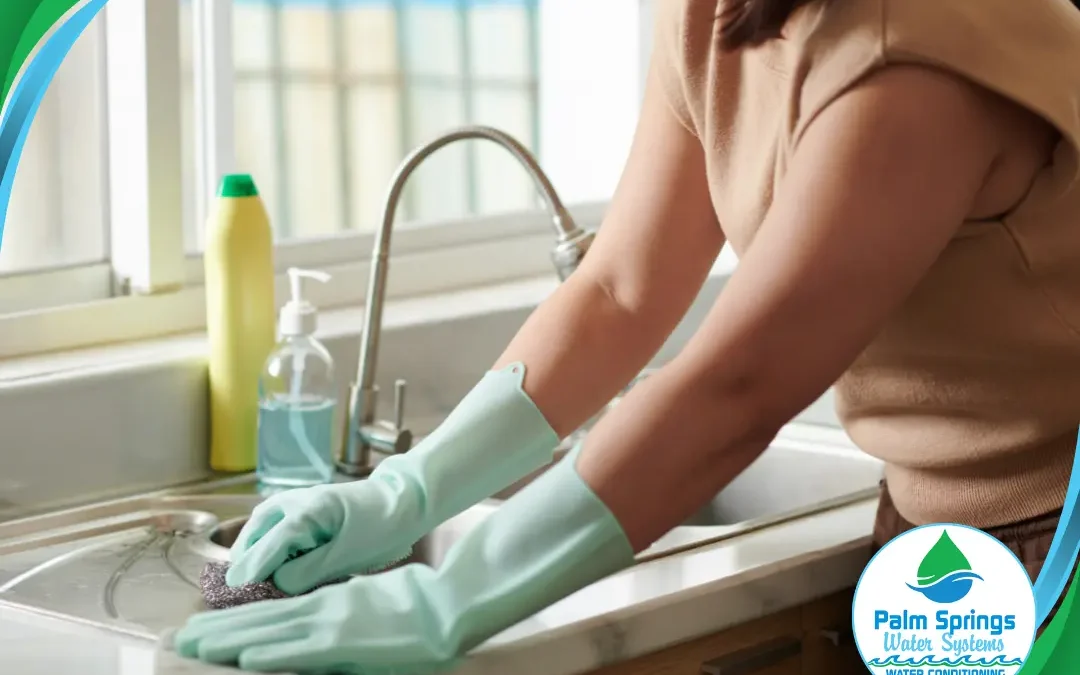
6. Soap Scum on Sinks, Tubs and Showers
That same interaction between soap and hardness minerals can contribute to soap scum and residue on bathroom surfaces.
7. Scale Inside Water-Using Appliances
Some of the most important hard water effects aren’t immediately visible.
Scale can develop inside appliances and equipment that repeatedly heat or use water, including water heaters, dishwashers and washing machines.
Can Hard Water Damage Your Water Heater?
Your water heater is one reason it makes sense to take hard water seriously.
When hard water is heated, minerals can precipitate out and form scale or sediment. Over time, that buildup can affect water-heating equipment and may contribute to reduced efficiency or additional maintenance.
In a hot desert climate where homeowners already have plenty of demands on household systems, preventing unnecessary mineral accumulation can be worthwhile.
Does Hard Water Affect Plumbing?
Hard water isn’t the same as a clogged pipe, but mineral scale can accumulate on plumbing fixtures and water-using components over time.
You may notice the effects first in places with small openings or heating elements, including:
- Showerheads
- Faucet aerators
- Valves
- Water heaters
- Dishwashers
- Coffee makers and kettles
The longer hard water is used, the more opportunity there is for mineral deposits to accumulate.
Is Palm Springs Hard Water Bad for Your Skin and Hair?
Hard water doesn’t affect everyone the same way, but many people dislike how bathing in it feels.
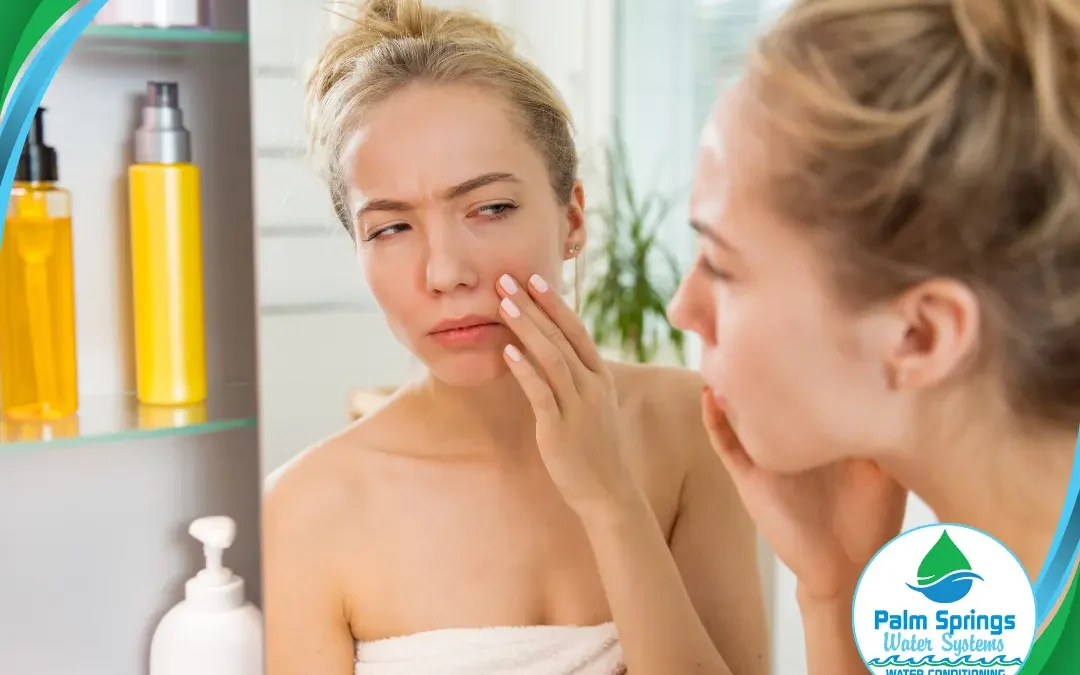
Hardness minerals can make soap and shampoo more difficult to rinse away completely. Some homeowners notice their skin feels less comfortable after showering or that their hair feels dull, coated or difficult to manage.
Switching to soft water also changes how soap behaves. Because soap lathers more readily in soft water, you may find you can use less shampoo, body wash and other products.
Related article: Desert Dryness or Hard Water? The Hidden Cause Behind Dry Skin and Dull Hair in the Coachella Valley
Is Hard Water Safe to Drink?
Hardness by itself is not generally considered a drinking water health hazard. Calcium and magnesium are naturally occurring minerals, and there is no health-based drinking water standard specifically requiring hardness to be removed.
However, hardness tells you only about mineral concentration. It does not tell you everything about your overall water quality.
If you’re concerned about the taste, odor or quality of your drinking water, water testing can help identify what is actually present and which treatment solution makes sense.
How Do You Fix Hard Water in a Palm Springs Home?
If testing confirms that hard water is causing problems in your home, there are two primary approaches Palm Springs Water Systems can help you consider.
Traditional Water Softener
A conventional water softener uses ion exchange to remove hardness minerals such as calcium and magnesium from the water.
Because the system treats water as it enters the home, soft water can help reduce scale and hard water problems throughout the house.
A traditional softener can be a good choice for homeowners who want their own permanently installed soft water system.
Soft Water Service With Portable Exchange Tanks
A traditional water softener isn’t the only way to enjoy soft water.
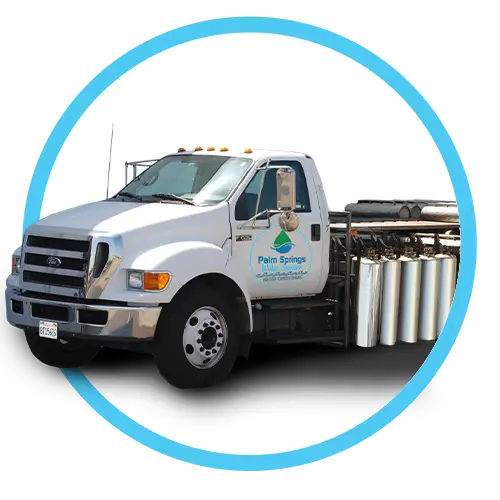
Palm Springs Water Systems also offers portable exchange tank service, sometimes called soft water service.
Instead of regenerating a conventional softener at your home, the exchange tank is periodically replaced with a freshly regenerated tank. This can provide the benefits of soft water without requiring homeowners to handle salt or operate a traditional regeneration system at the property.
This can be an attractive option depending on your home, lifestyle and preferences.
Water Softener or Portable Exchange: Which Is Better?
Neither solution is automatically right for every household.
A traditional water softener may make sense if you want to own or lease an installed system and are comfortable with the system’s normal salt and maintenance requirements.
Portable exchange tank service may appeal to homeowners who want soft water with simpler day-to-day ownership and without adding salt to a softener themselves.
Factors to consider include:
- Your home’s water hardness level
- Household water consumption
- Available installation space
- Whether a drain and electrical connection are available
- Maintenance preferences
- Whether you prefer equipment ownership, leasing or ongoing service
At Palm Springs Water Systems, we can evaluate your water and household needs before recommending a solution.
Does a Reverse Osmosis System Fix Hard Water?
This is an important distinction.
A whole-home water softener is designed to address water hardness throughout your home.
A reverse osmosis system is typically used at a specific point of use—often the kitchen—to provide high-quality drinking and cooking water.
If your main concerns are scale on faucets, shower doors, water heaters and other fixtures throughout the house, a whole-home soft water solution is generally the more appropriate approach.
If your primary concern is the quality, taste or composition of your drinking water, reverse osmosis may be appropriate.
Some homes benefit from both: soft water throughout the house and reverse osmosis water at the kitchen sink.
Should You Have Your Palm Springs Water Tested?
Yes—especially if you’re considering purchasing or leasing water treatment equipment.
Regional water quality reports are useful for understanding the local water supply, but they aren’t a substitute for knowing what’s coming from your own tap.
Testing your home’s water can help answer questions such as:
- How hard is my water?
- What treatment system is appropriate for my water?
- What size system does my household need?
- Would a water softener or portable exchange service make more sense?
- Do I have additional drinking water concerns that require another type of treatment?
The goal shouldn’t be to install as much equipment as possible. It should be to identify the water problems you actually have and select the right solution for them.
FAQs About Palm Springs Hard Water
Is the water in Palm Springs hard or soft?
Water hardness can vary throughout Palm Springs and the greater Coachella Valley because water sources and service areas differ. Many area homeowners experience common hard water symptoms such as mineral scale, spots and buildup. Testing your home’s water provides the most useful measurement.
What causes hard water in the Coachella Valley?
Hard water occurs when water contains dissolved minerals, primarily calcium and magnesium. Groundwater can pick up these naturally occurring minerals as it moves through rock and soil.
Is Palm Springs hard water safe to drink?
Hardness itself is generally considered a water quality issue rather than a drinking water safety issue. However, hardness doesn’t tell you whether other substances are present in your water. Review your water provider’s current water quality report and consider testing if you have specific concerns.
What are the most common signs of hard water?
Common signs include white mineral deposits, spots on dishes and glasses, cloudy shower doors, scale around faucets and showerheads, difficulty creating soap lather and mineral accumulation in water-using appliances.
Will a water filter remove hardness?
Not every water filter removes hardness. Standard filtration and water softening accomplish different things. A conventional ion-exchange water softener is specifically designed to remove calcium and magnesium hardness minerals.
Does reverse osmosis soften water?
Reverse osmosis can reduce many dissolved substances at a point of use, but an under-sink RO system isn’t a substitute for a whole-home water softener when the goal is to address hard water throughout the house.
What is the best water softener for Palm Springs hard water?
The best system depends on your actual water hardness, household water consumption, available space and preferences. Testing the water first allows the system to be properly selected and sized.
Can I get soft water without maintaining a traditional water softener?
Yes. Portable exchange tank service provides another option. Palm Springs Water Systems periodically exchanges the tank, eliminating the need for the homeowner to regenerate a conventional softener at the property.
Find the Right Solution for Hard Water in Palm Springs
If scale, spots and mineral buildup have become part of everyday life in your home, you don’t have to simply accept them as part of living in the desert.
Start by finding out how hard your water actually is.
Palm Springs Water Systems can help evaluate your water and explain the treatment options available for your home, including traditional water softeners and convenient soft water service with portable exchange tanks.
Instead of guessing which system you need, get recommendations based on your water, your household and your goals.
Contact us today to learn more about testing your water and finding the right solution for hard water in your Palm Springs or Coachella Valley home.